12 Best Furniture Removal Tips for a Safer Move
A sofa that will not clear the hallway, a scratched timber table, and a washing machine left connected until the truck arrives can turn moving day into a costly delay. The best furniture removal tips are rarely complicated, but they do require planning before anyone starts lifting. A safer move comes down to clear access, proper protection, realistic timing, and knowing when an item needs professional handling.
Best Furniture Removal Tips Before Moving Day
1. Measure furniture, doorways, and tight turns
Do not assume that a piece of furniture that made it into your current home will easily come out. Measure the length, width, and height of large pieces, then measure door frames, elevators, stairwells, hallways, and sharp turns. Include handrails and low ceilings in your check.
This step is especially useful for apartment moves in inner Melbourne, where narrow corridors, shared elevators, and limited loading areas are common. If an item will only fit when tilted, assess whether there is enough room to turn it safely. For unusually large sofas, stone tables, or commercial furniture, a removal crew may need to plan an alternate route or arrange specialized equipment.
2. Make a keep, sell, donate, and dispose decision early
Moving furniture you no longer need costs time, truck space, and labor. Walk through each room at least two weeks before the move and decide what is actually coming with you. Be realistic about whether a bulky cabinet suits the new floor plan or whether an old mattress is worth transporting.
Selling or donating usable items before moving day can reduce the size of truck and crew required. Disposal takes more coordination, so check local requirements rather than leaving unwanted furniture on the curb. The less unnecessary weight you move, the more efficiently the day will run.
3. Empty every drawer, shelf, and cabinet
A dresser may look manageable until its drawers are full of books, clothing, and loose items. Empty furniture wherever possible. It makes pieces lighter, reduces the chance of drawers sliding open, and prevents contents from shifting and damaging the frame during transport.
Use small boxes for heavy items such as books, tools, and paperwork. A box that is too heavy is difficult to carry safely, even if it saves space. For lightweight clothing, some drawers can be packed into labeled cartons so they are easy to return after delivery.
4. Disassemble only what needs to come apart
Beds, modular sofas, dining tables, and large shelving units often move more safely when partly disassembled. Remove table legs, headboards, detachable shelves, and fragile glass panels when the design allows it. Keep screws, bolts, brackets, and assembly instructions together in a labeled bag taped to the relevant item or stored in a clearly marked essentials box.
There is a trade-off here. Taking apart simple furniture can save time at the doorway. Over-disassembling a complex item can create confusion, lost hardware, and longer reassembly time. If a piece has structural parts, electrical components, or a complicated mechanism, ask your removalist how it should be prepared rather than forcing it apart.
5. Protect timber, glass, and upholstered pieces properly
Blankets, furniture pads, shrink wrap, and purpose-made covers each have a role. Furniture pads help protect timber and painted surfaces from rubbing against other items. Stretch wrap is useful for securing doors, drawers, and padded blankets, but it should not be applied directly to delicate polished timber or leather for long periods, particularly in warm conditions.
Glass tabletops, mirrors, and framed artwork need separate protection and should be clearly labeled as fragile. Remove glass from tables when possible. Mattresses benefit from fitted protective bags, while sofas and armchairs should be covered to keep fabric clean during loading and unloading.
Plan the Move for Safe Loading and Delivery
6. Reserve access at both properties
The truck needs a practical place to park, not just a nearby street. Check for loading zones, building management rules, time limits, low branches, steep driveways, and parking restrictions at both addresses. If you are moving from or into an apartment, reserve the elevator and confirm the building’s move-in requirements.
A truck parked too far from the entrance adds carrying distance and increases the risk of damage or delays. It can also affect the time worked. Providing access details when requesting a quote helps the removal company send the right truck and crew.
7. Clear a path before the crew arrives
Move boxes, plants, shoes, rugs, and loose items away from hallways and doors. Keep children and pets in a safe, separate area while heavy furniture is being carried. If rain is expected, prepare towels or mats near entry points to reduce wet, slippery floors.
At the destination, decide where major items belong before unloading begins. A simple room plan prevents a heavy wardrobe or sectional sofa from being carried twice. Mark rooms clearly if the layout is unfamiliar or if multiple people are directing the move.
8. Use the right lifting method, not extra effort
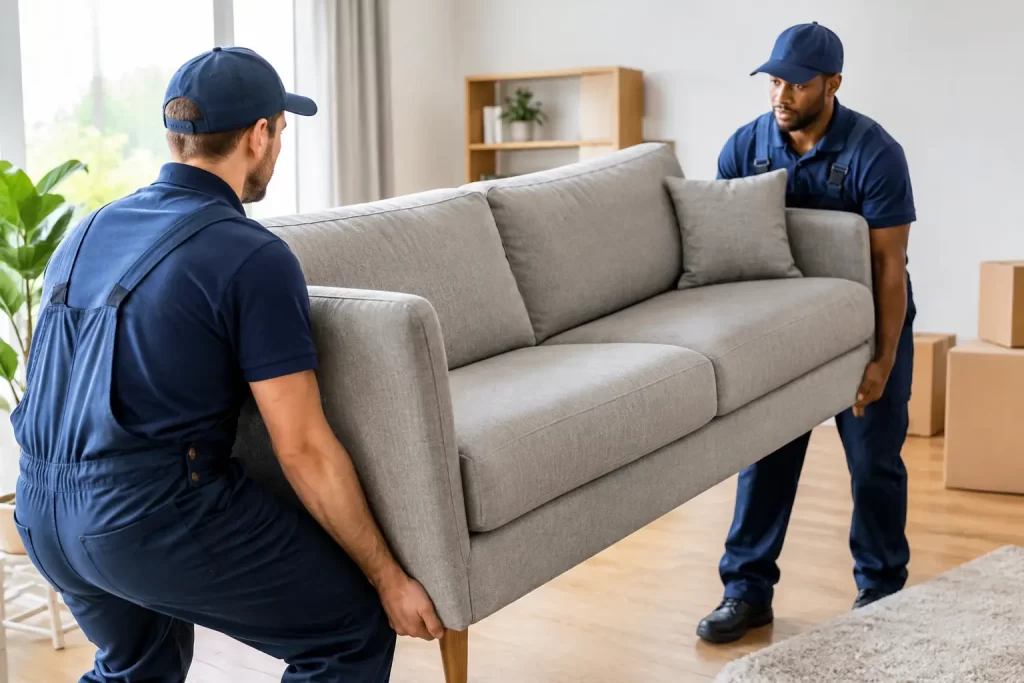
Heavy furniture should be lifted with bent knees, a straight back, and a controlled grip. Keep the item close to your body and communicate before lifting, turning, or setting it down. Never try to catch a falling item or twist while carrying weight.
Some pieces should not be moved by one person, regardless of how short the distance appears. Recliners, solid timber buffets, appliances, safes, and oversized desks can be awkward as well as heavy. Dollies, lifting straps, furniture sliders, and trained movers reduce strain, but they do not remove the need for a clear plan.
9. Load the truck in the right order
Heavy, stable items should generally go in first and be secured against the truck walls. Sofas, mattresses, tables, and appliances need to be positioned so they cannot slide, tip, or crush lighter boxes. Fragile items should never be left loose on top of unstable loads.
Loading order also affects delivery. Items required first at the new property, such as beds or essential office furniture, may need to be accessible. A professional crew will balance protection with practical unloading order, using straps and padded blankets to keep the load secure in transit.
10. Prepare appliances well in advance
Fridges and freezers need to be emptied, defrosted, cleaned, and dried before moving. Water remaining inside can leak onto furniture and cartons. Washing machines and dishwashers should be disconnected according to manufacturer instructions, with hoses drained and secured.
Do not leave appliance preparation until the morning of the move. Some refrigerators need time standing upright before they can be switched on after transport. Check the manufacturer’s guidance, particularly if the appliance has been moved on its side or at an angle.
11. Photograph high-value furniture before packing
Take clear photos of valuable, antique, or already damaged pieces before they are wrapped. Photograph corners, tabletops, upholstery, and existing marks. This creates a useful record and helps everyone identify pre-existing wear.
It also gives you a chance to flag items needing extra care. Tell the crew about loose legs, weak joints, marble tops, or surfaces that scratch easily. Clear information is more useful than discovering an issue halfway through a staircase carry.
12. Choose a removalist based on accountability, not only price
The cheapest quote is not always the lowest-cost move. Ask who will perform the work, whether movers are directly employed, what insurance applies, how damage claims are handled, and whether there are extra charges for stairs, travel time, fuel, or weekend work. A clear hourly rate and a realistic estimate are often easier to assess than a vague fixed price.
For Melbourne moves, House Removalists Melbourne uses company-employed crews and owned trucks rather than subcontractors. That matters when you need a real person to answer questions about access, packing, timing, or an item that needs extra protection.
A Few Hours of Preparation Can Prevent a Long Day
Furniture removal is physical work, and even a small oversight can create a bottleneck at the front door. Confirm measurements, prepare access, protect vulnerable surfaces, and speak up early about difficult items. When the truck arrives, the best outcome is not simply getting everything from A to B. It is opening the door at your new place and finding every important piece ready to use, intact and in the right room.