How to Move Heavy Furniture Without Injury
A solid timber buffet, a reclining sofa, or a king-size bed frame can turn a straightforward move into the highest-risk part of moving day. Knowing how to move heavy furniture is less about brute strength and more about planning the route, using the right equipment, and knowing when a piece needs a trained crew. A rushed lift can damage floors, scrape walls, strain your back, or cause a piece to tip.
Start With the Route, Not the Lift
Before anyone puts hands on the furniture, measure it and inspect the path from its current room to the truck. Check doorways, hallways, stair landings, elevators, gates, and the space around parked vehicles. A couch that fits through a doorway may still be difficult to turn through a narrow hall.
Remove loose obstacles first. Roll up rugs, move side tables, clear shoes and boxes from hallways, and secure pets in a separate room. Protect vulnerable surfaces with moving blankets, cardboard, or floor runners where needed. This takes a few extra minutes, but it avoids the common problem of carrying a heavy item while someone tries to clear a path in front of you.
Think through the final placement too. If the furniture is going into storage, a garage, or a new home, decide where it will sit before unloading. Heavy pieces are much harder to reposition once a truck is empty and the crew has left.
Empty, Disassemble, and Protect Each Piece
Furniture should be as light and stable as possible before it moves. Empty drawers, shelves, cabinets, and credenzas completely. Even when drawers stay closed, their contents can shift, adding weight and putting pressure on runners or hinges.
Remove legs from sofas and tables where practical. Take mattresses off bed frames, separate headboards and footboards, and dismantle modular furniture into manageable sections. Put screws, bolts, and small fittings in labeled bags, then tape the bag securely to the matching furniture item or keep it in an essentials box.
Wrap timber, glass, leather, and upholstered surfaces before moving them. Moving blankets help prevent scratches and reduce impact damage in the truck. Stretch wrap can hold blankets in place and secure drawers or doors, but do not apply adhesive tape directly to finished timber, leather, or delicate surfaces. Tape can lift finishes or leave residue behind.
Glass tabletops need special care. Remove them from their bases where possible, wrap them thoroughly, and carry them upright rather than flat. A large flat glass panel is more likely to flex and crack if carried horizontally.
Use Equipment That Reduces the Risk
The right equipment changes the job. A furniture dolly, hand truck, shoulder moving straps, sliders, and moving blankets can reduce physical strain and protect the property. Equipment does not replace good judgment, though. A poorly loaded dolly can tip, and lifting straps require coordination between both people.
Furniture sliders are useful for shifting a couch, cabinet, or dresser across carpet, tile, or timber flooring. They work best for short, level moves within a room. Do not use sliders to pull a heavy piece down a ramp, across stairs, or over uneven surfaces.
A four-wheel furniture dolly is usually the best choice for wide, heavy items such as dressers, buffets, and filing cabinets. Keep the item centered, secure it with straps if it is tall or unstable, and have one person guide while another controls the movement. For appliances, a purpose-built appliance dolly with a strap is safer than a standard hand truck.
If you are moving a large item down steps or loading it into a truck, a loading ramp and enough experienced hands matter more than speed. Never attempt to catch a falling item. Step clear and protect people first.
How to Move Heavy Furniture With Safe Lifting
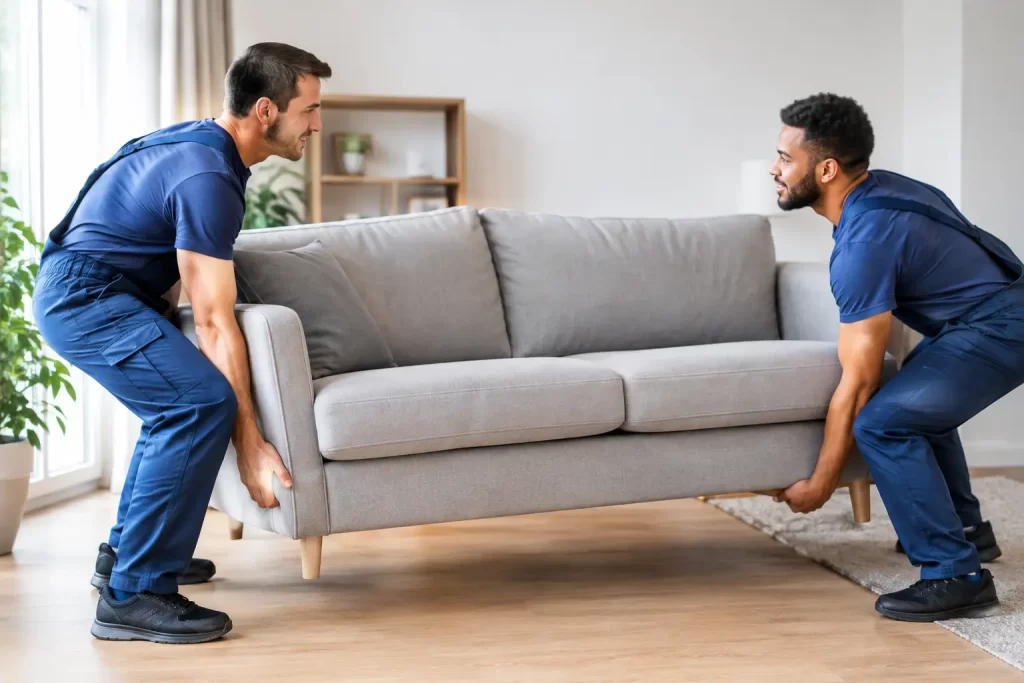
When a piece must be lifted, use at least two capable people and agree on the plan before lifting. Decide who will walk forward, who will walk backward, where you will stop, and what commands you will use. Simple calls such as “lift,” “stop,” “left,” and “down” prevent confusion when visibility is limited.
Stand close to the item with your feet shoulder-width apart. Bend at your knees and hips, keep your back neutral, grip firmly, and lift using your legs. Keep the load close to your body. Avoid twisting while carrying. If you need to turn, move your feet rather than rotating through your back.
Do not lift a piece simply because it looks manageable. Solid-wood furniture can be far heavier than expected, while recliners and sofa beds can have uneven weight distribution and moving internal parts. If an item feels unstable, awkward, or beyond comfortable control, stop and change the plan.
Carrying furniture at waist height is not always necessary. Many pieces move more safely when tilted slightly and carried low, as long as the weight remains controlled and nobody’s fingers are trapped underneath. Keep hands clear of pinch points around legs, doors, drawers, and folding sections.
Stairs, Tight Corners, and Elevators Need a Different Plan
Stairs are where DIY furniture moving becomes most hazardous. The person walking downhill carries more of the load and has less room to recover if balance is lost. Use experienced helpers, take breaks at landings, and keep the furniture angled in a way that maintains control without blocking sightlines.
Do not use shoulder straps on stairs unless everyone understands how to release them quickly. Straps can make a load easier to carry on level ground, but they can also make it harder to step away if the item shifts.
For tight corners, try changing the orientation of the item before forcing it. A sofa may need to go upright, on its end, or through a doorway at an angle. Remove doors from hinges only if you can do so safely and reinstall them correctly. In apartment buildings, reserve elevators in advance and confirm the dimensions, loading access, and building move rules.
Load the Truck for Stability, Not Convenience
The heaviest furniture belongs low and toward the front of the truck, closest to the cab. This helps distribute weight and prevents lighter cartons from being crushed. Place moving blankets between furniture pieces, then use tie rails and straps to stop items from shifting in transit.
Avoid stacking heavy furniture unless the piece is designed for it and the load is properly secured. Mattresses, light boxes, cushions, and soft furnishings can fill protected gaps, but they should not be used to support a heavy cabinet or table.
Keep essential access clear. You should be able to reach tie-down points, close the truck door safely, and unload in a sensible order. A truck packed without a plan often means moving the same heavy item twice, which adds time, cost, and risk.
Know When Professional Movers Are the Safer Option
Some furniture moves are best handled by professionals, especially when stairs, oversized items, fragile finishes, restricted access, or tight settlement deadlines are involved. A piano, large safe, stone tabletop, commercial filing unit, or solid-wood wardrobe needs specialist planning. Trying to save money on a difficult item can become expensive if it damages a stairwell, building elevator, floors, or the furniture itself.
For a full household move, professional movers also bring the practical systems that are hard to recreate on your own: the right truck size, floor and furniture protection, dollies, ramps, straps, blankets, and a crew used to working together. Ask clear questions before booking. Confirm whether protective wrapping is included, how travel time is billed, what insurance applies, and whether the crew is directly employed or subcontracted.
House Removalists Melbourne uses trained, company-employed crews and owned trucks for local and regional Victorian moves. That accountability matters when your heaviest and most valuable furniture is being carried through your home.
A Quick Safety Check Before You Move
Pause before each major lift and confirm four things: the path is clear, the item is secure, everyone understands the next move, and there is a safe place to set it down. If any answer is uncertain, take another minute to prepare.
Heavy furniture does not reward rushing. A careful route, proper protection, and enough help will keep moving day on track and give your furniture the best chance of arriving exactly as it left.