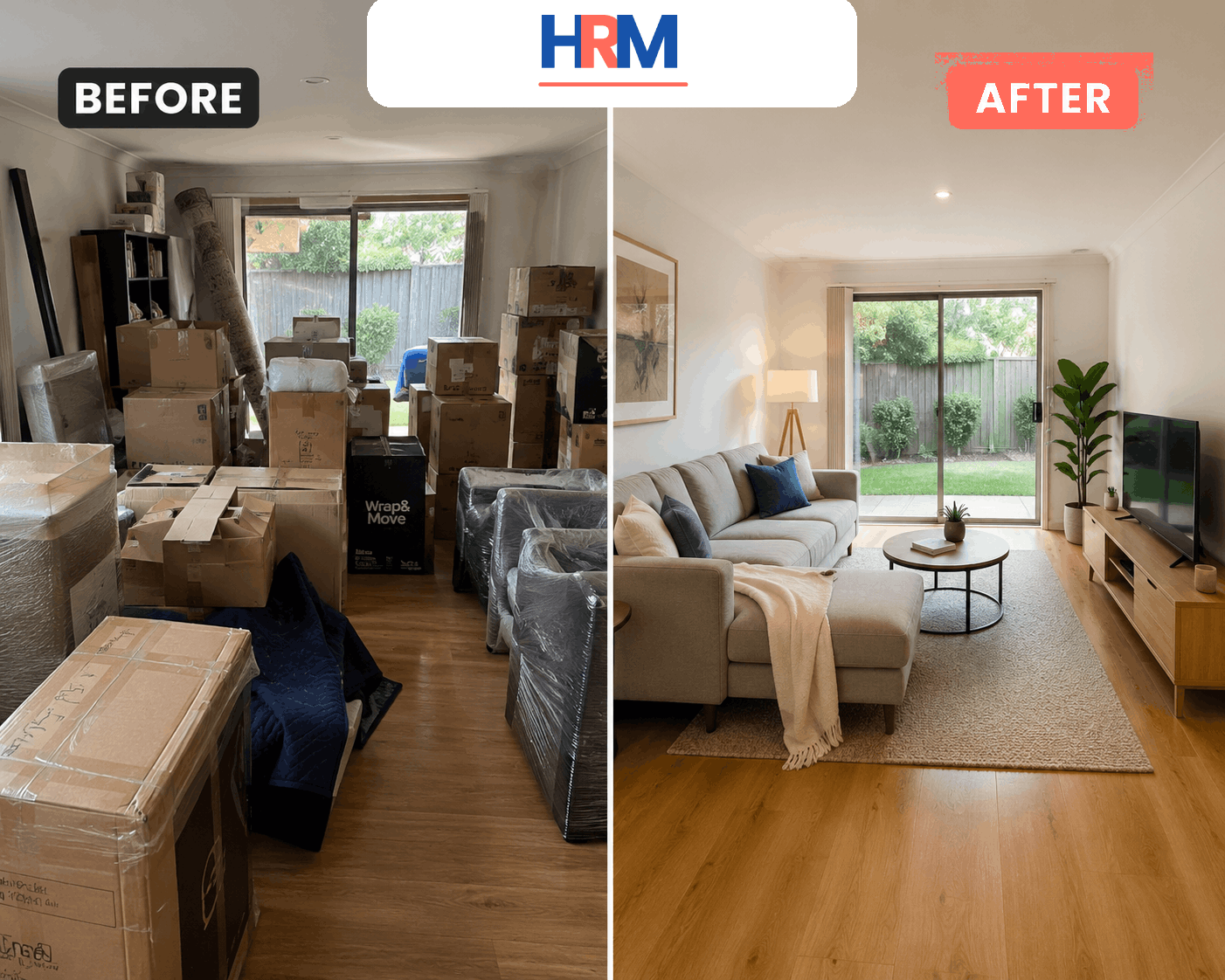
Moving house is really three jobs in one — packing up your old life, getting it safely across town, and setting up the new one. Do all three well and moving day feels manageable. Skip the planning on any one of them, and you'll spend weeks living out of boxes you can't find.
We've been packing, moving and unpacking Melbourne homes since 2012, and the same patterns show up on almost every job. Here's how to get each phase right.
Pack
Our packers carefully pack your items into boxes, room by room.
Move
Our movers transport everything safely to your new home.
Unpack
Our unpackers unpack and place it all neatly, ready to live in.
Pack
Start with a room-by-room timeline, not a to-do list
A single "pack the house" to-do item is overwhelming and easy to put off. Instead, block out rooms across the weeks before your move:
- 3–4 weeks out: Storage areas, garage, spare room, off-season clothing
- 2 weeks out: Books, décor, non-essential kitchenware, linen
- Final week: Everyday kitchen items, wardrobe, bathroom
- Moving day morning: Bedding, chargers, medications, the kettle
Label for the unpack, not just the box
Most people label boxes by room, which is a good start, but it doesn't tell your future self — or your removalist — what's inside or how urgent it is. Try this instead:
- Room name in large letters (KITCHEN, MAIN BEDROOM)
- One-line contents summary (pots, pans, tea towels)
- A priority mark: 1 for open-first-day, 2 for open-this-week, 3 for no rush
This system means your crew can stack boxes intelligently at the new place — priority-1 boxes accessible, everything else grouped by room out of the way.
Protect what actually breaks
Wrapping every item in paper burns time you don't need to spend. Reserve bubble wrap and packing paper for genuinely fragile items — glassware, framed art, electronics, anything ceramic — and use towels, linen, and clothing as free padding for everything else. It's a two-for-one: your soft furnishings get transported and your breakables get cushioned.
Take apart furniture before moving day
Beds, flat-pack wardrobes, and modular shelving all move faster and safer disassembled. Bag the screws and tape the bag to the matching piece of furniture — nothing derails an unpack like a bed frame with no bolts.
Part 2
Move
Melbourne moves come with logistics most guides skip
If you're moving within Melbourne, the drive is rarely the hard part — access is. Things worth checking before moving day:
- Parking permits: Many inner-Melbourne councils (Port Melbourne, Albert Park, East Melbourne, North Melbourne) require a temporary parking permit for a removal truck outside your building. Apply with your local council at least a few business days ahead.
- Lift bookings: Apartment buildings in Docklands, Southbank, and the CBD typically require the service lift to be pre-booked in a set time window. Confirm this with your building manager, not just the strata plan — booking windows fill up fast.
- Loading dock access: Some buildings restrict loading dock hours or require a certificate of currency from your removalist's insurer before they'll let a truck in. Ask early; this paperwork can take a few days to organise.
- Event-day closures: If you're moving near the Melbourne CBD, Albert Park, or the MCG precinct, check the event calendar. Grand Prix week and major MCG events close roads and restrict access with little warning if you haven't planned around them.
Keep an essentials box out of the truck
Pack one box or bag that never goes near the truck: phone chargers, medication, a change of clothes, toiletries, snacks, and any documents you need immediate access to. After a full day of moving, the last thing you want is to unpack six boxes just to find your toothbrush.
Do a final walkthrough
Before you lock up, walk every room, cupboard, and the garage. It's the easiest way to catch the one box left behind on the top shelf.
Part 3
Unpack
Set up beds and bathrooms first
However tempting it is to dive into the kitchen or living room, get beds made and bathrooms functional first. You'll move faster through the rest of the unpack once you know you have somewhere comfortable to land at the end of the day.
Unpack by priority label, not by box size
This is where the labelling system from Part 1 pays off. Work through your priority-1 boxes first, then priority-2, then priority-3. You'll have a liveable home within the first day or two, rather than a house full of half-opened boxes in every room.
Break down boxes as you go
Flatten and stack empty boxes immediately rather than letting them pile up. It keeps walkways clear and makes the final round of rubbish removal far less daunting.
Give yourself permission to go slow on priority-3
The keepsakes, the "maybe I'll display this" décor, the off-season storage — these don't need to be sorted in week one. Get the essentials of daily life running first, and let the rest happen over the following weeks.